


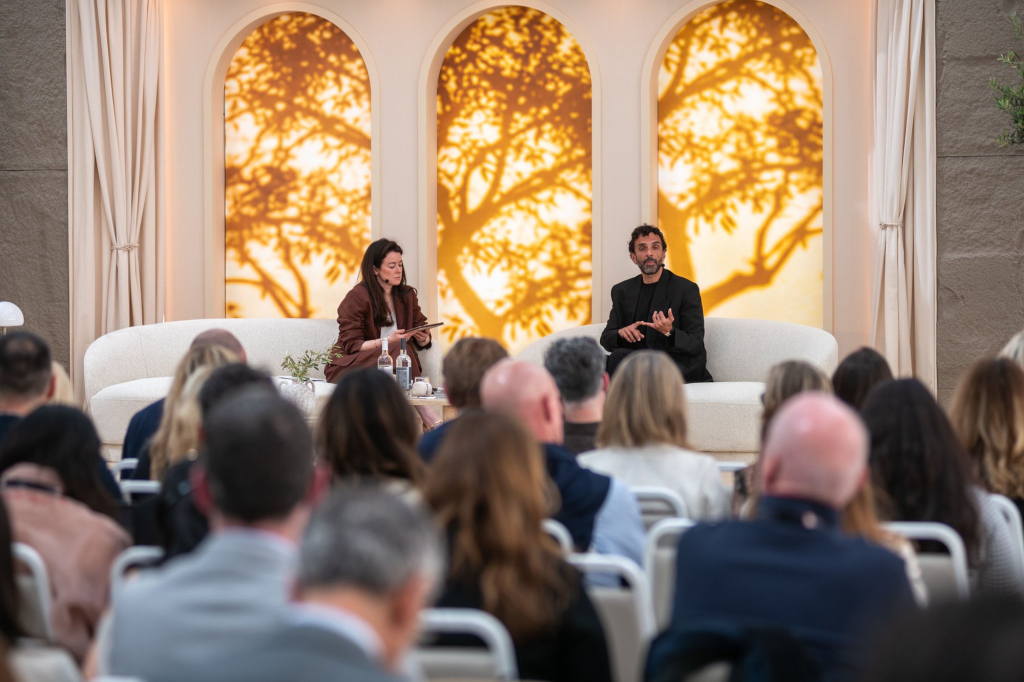
FT Luxury Summit with Elizabeth Paton and Cedric Charbit
The most desirable house in fashion posted declining revenue three years running but may be Kering’s healthiest business.
In 1966, Yves Saint Laurent was the first couturier to put a tuxedo on a woman and changed the balance of power. Le Smoking was not a costume experiment. “It was a structural argument and in Paris in 1966, a political one. Women were not allowed to wear trousers in public. Saint Laurent was claiming equality through the one institution powerful enough to make it look inevitable: Haute Couture. The clientele was not ready. Barely one piece sold after the show.
Two years later, Nan Kempner arrived at La Côte Basque in New York wearing Le Smoking trousers. She was turned away at the door. She removed the trousers at the door and walked in wearing the jacket as a dress. The gesture became a political one because the garment already was one. Sixty years on, that idea, emancipation cut into cloth, remains Saint Laurent’s most ownable asset. Read through the balance sheet, it also points to the most interesting financial story inside Kering.
In Q3 2025, Saint Laurent ranked first on the Lyst Index.1 In the same year, revenue fell for the third time running, from a €3.30 billion2 peak in 2022 to €2.64 billion.3 Desirability is not the problem.
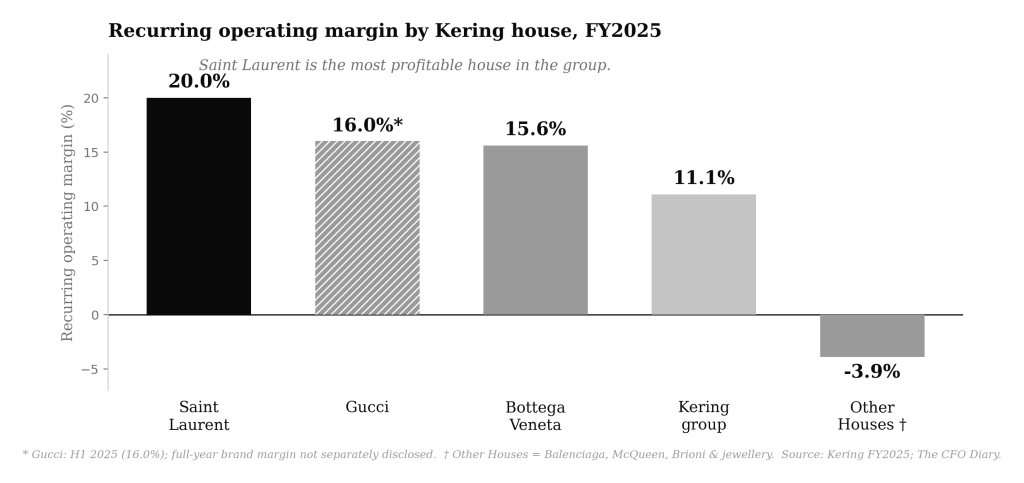
On margin quality, Saint Laurent is Kering’s healthiest large business. It carries a 20.0 percent recurring operating margin in 2025, close to double the group’s 11.1 percent.3 Saint Laurent is Kering’s highest-margin house and its most credible growth engine, the asset best positioned to lead the recovery while Gucci is rebuilt.
Under Francesca Bellettini, Saint Laurent grew on a disciplined pricing architecture, recruit the customer at an accessible entry point, then elevate her from within. The structure still stands. Roughly three-quarters of the women’s handbag line lists between €500 and €3,000,4 the precise band Bain identifies as the home of the aspirational customer.
Bain estimates 70 million aspirational customers left luxury between 2022 and 2025, an exodus it attributes to price, not taste. While Chanel pushed the classic flap beyond €10,000 and Dior elevated the Lady and the Book Tote, Saint Laurent held its floor. Bain estimates 70 percent of those customers intend to return.5 Saint Laurent’s pricing architecture is built to receive them. No other large house is better positioned for that trade.
The mechanism that recruited the customer through the last cycle was the visible logo: the Cassandre monogram on the Loulou, the Niki, the Kate. Approximately 75 percent of hero bags carry it. For several years that was the product. The badge read instantly as Saint Laurent across a feed and the customer paid €1,500 to wear it.
This cycle is ending. The customers still buying luxury are buying substance over signal. In Saudi Arabia, the Saudi Fashion Commission’s consumer survey ranks brand recognition last among purchase drivers, at 21 percent. Quality ranks first, at 85 percent.6 The same shift is under way in China, where the market has moved toward quiet luxury and away from the visible badge. The bag is priced right. The badge is the problem.
The bag is priced right. The badge is the problem.
In February 2026, Saint Laurent hired Johnny Coca from Louis Vuitton as its first dedicated artistic director for leather goods.7 The brief is legible: craft-led, more permanent, less logo-dependent icons.
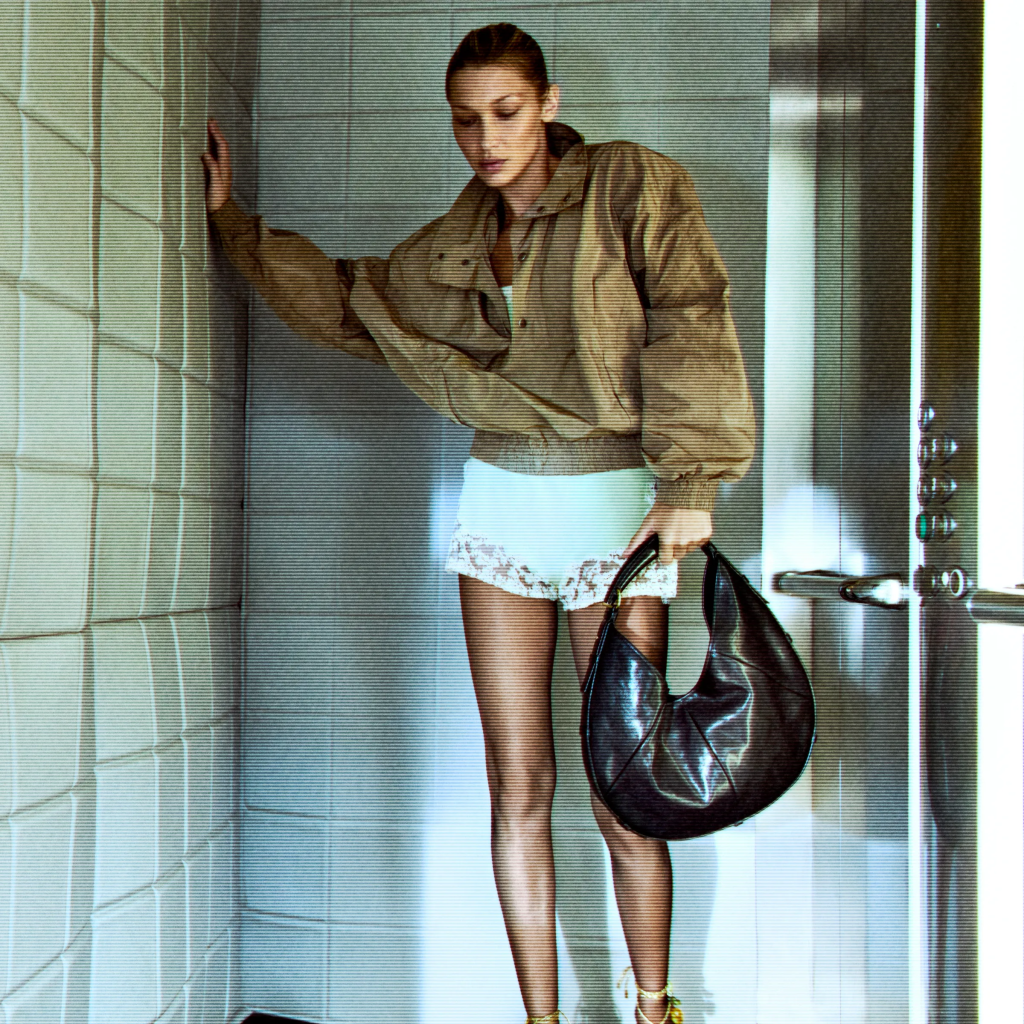
“The Mombasa: Saint Laurent’s logo-free 2002 It-bag, reissued for 2026 with Bella Hadid”
Saint Laurent owns the deepest personal archive in luxury: Le Smoking, the Saharienne, the Mondrian dress, the Ballets Russes collection, the direct references to Picasso and Matisse. Few houses hold a comparable body of work. Anthony Vaccarello calls the house part of the cultural heritage of France.8 Catherine Deneuve made Le Smoking famous wearing it across film after film, it is part of French cultural identity, not just fashion history.
The Fall 2026 show opened with a Le Smoking series.9 The miss is one of scale: one runway moment, where Dior mounts heritage as routine, Christian Dior, Designer of Dreams touring the world, and a current exhibition pairing Dior with Alaïa that puts Yves Saint Laurent’s own pieces on display inside Dior’s gallery.10 Dior is telling part of Saint Laurent’s story for it. The house knows how to mobilise its archive at institutional scale, it proved that in 2022. This year, with arguably its most commercial piece of heritage, it did it once, on a runway.
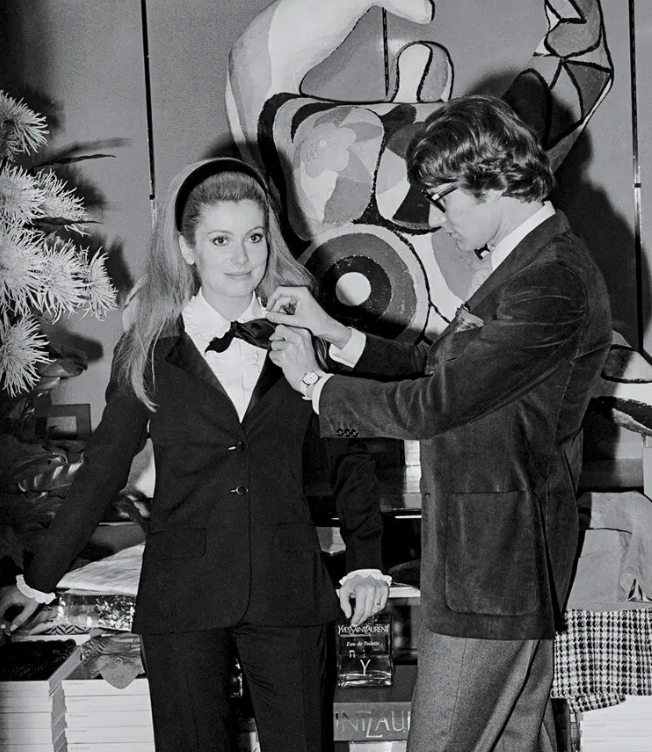
The contemporary vision Vaccarello has built,Rive Droite, Babylone, the cinema and art world, combined with the depth of the archive gives Saint Laurent the raw material to compete with, or make envious, the biggest houses in luxury.
Saint Laurent is not a fading brand. It is the hottest brand in fashion that has not yet converted its desirability into durable, high-margin revenue. The fix is not more heat. It is monetisation: an icon-bag franchise, a defended margin floor, a couture offer that has not yet revealed its full revenue potential.
The recent appointment of Marie-Hélène Chenut to Kering’s board signals the direction.11 After more than three decades at Chanel, most recently heading the haute couture and ready-to-wear ateliers, her arrival reinforces what Charbit12 has already stated publicly: couture is a lever. It has not been pulled at scale.
It is the hottest brand in fashion that has not yet converted its desirability into durable, high-margin revenue.
The CFO Read
The 20 percent margin floor ( delivered while reducing wholesale13 ) proves Saint Laurent has the right structure for the next cycle. Le Smoking, at sixty, proves it has somewhere to grow. Activating what it already owns, the suit beside the dress, the archive through its own platforms, is how it widens the base without discounting and without leaning harder on a logo the market is already leaving behind.
All eyes are on Gucci’s rescue. The quieter truth is that Kering’s best large business is already the house that put a tuxedo on a woman in 1966 and has yet to tell anyone, at scale, that it did.
The only question that matters is whether the archive stays on the balance sheet or finally moves to the income statement.
 Fashion Office
This week, LuxExperience’s shares jumped as much as 24% on its results. Group CEO Michael Kliger...
 Fashion Office
Chantilly 12.05.2026 C.F.O :Capital Fahion and Opinion Six panels. Four pillars of the luxury growth model...
 Fashion Office
Luxury’s problem is no longer desire. The queues are back. The wishlists are alive. The shop...



No comments yet.