


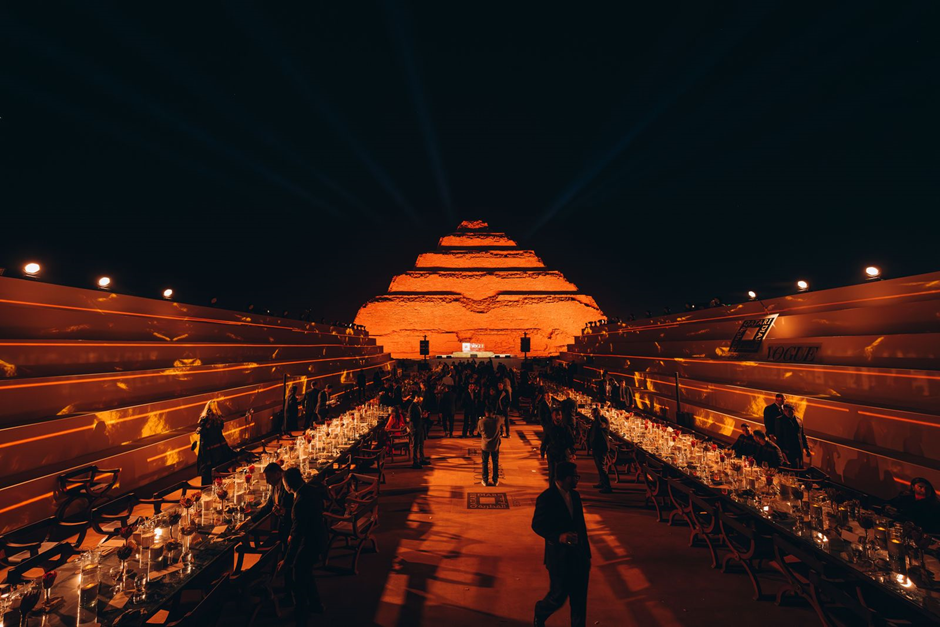
Source: Vogue Arabia x Qatari Diar in Egypt
As we enter 2026, luxury fashion is not facing a creativity crisis. It is facing a relevance one.
The industry is holding its breath, hoping that creative reshuffles, new designers, and louder campaigns will bring consumers back into stores. But the slowdown runs deeper than aesthetics. Over the past few years, luxury consumers including UHNWI individuals have quietly recalibrated how they spend.
Analysts often blame sharp price increases, or what some call “greedflation.” That explanation is convenient, but incomplete. Even at the top of the wealth pyramid, demand has softened. The Knight Frank Luxury Investment Index fell 3.3% in 2025, not because wealthy consumers stopped spending, but because they reallocated it. Less toward objects, more toward experiences. Less toward possession, more toward access. This reallocation points to a deeper shift: in luxury, Return on Emotion (RoX) is becoming as decisive as Return on Investment.
The emotion attached to having something is no longer enough. The emotion attached to living something now carries more weight. This shift is not anecdotal. Bain & Company’s latest luxury market analysis shows that experience-led segments including high-end travel, hospitality, and wellness have consistently outperformed traditional luxury goods in recent years.
Luxury travel and wellness have emerged as clear beneficiaries of this shift. In a world where almost everything can be bought, consumers increasingly express identity through how they feel, how they look, and where they go. Health, exclusivity, and social experience have become new markers of distinction.
Luxury brands leaned too heavily on a familiar expansion model: scale the logo, multiply categories, raise prices, and assume brand equity would do the rest. It worked until it didn’t.
The consequences are now visible not only in profit warnings, but in the quieter erosion of brand equity. Consumers did not reject luxury. They emotionally withdrew from it. They still buy, but with less attachment, less loyalty, and less patience.
The moment consumers start saying, “I’m not paying that for A BAG,” price has entered a space where desire should have been. That is not a pricing problem. It is a strategic one.
Luxury, by nature, should sit outside utility thinking. Yet many maisons drifted into a utility-based logic, where products were evaluated, compared, and questioned like commodities. When value needs to be justified rationally, the magic has already thinned.
To regain relevance, luxury brands must rethink how they define success. Traditional metrics — sales growth, margins, return on investment — still matter. But they are no longer sufficient in a category built on desire, memory, and emotion.
This is where Return on Emotion (RoX) becomes essential.
Luxury is no longer just about owning something. It is about the story, the identity, and the network that come with it. About how a brand makes you feel — and whether that feeling last.
Behavioral economist Thomas Gilovich has shown that experiences deliver more enduring happiness than material purchases — not because they are superior, but because they integrate into identity, improve with memory, and resist comparison. People describe experiences as who I am, while objects are described as what I own.
In a world where super fakes rival originals and products are endlessly replicated, identity becomes the true differentiator. The question shifts from what you bought to what you lived. BCG’s research on high-spending luxury consumers reaches a similar conclusion: the most valuable clients are no longer motivated by ownership alone, but by access, personal relevance, and experiences that reinforce identity.
This is not about abandoning the product. It is about anchoring it to emotion. The bag is no longer the value. The experience makes the bag irreplaceable.
The data supports this shift. Consumers who participate in live or experiential brand moments are significantly more likely to purchase afterward and report stronger, more positive feelings toward the brand. Emotional engagement does not just drive conversion — it drives memory, loyalty, and repeat behavior.
That is why luxury brands are doubling down on ultra-private experiences, access-only events, and curated moments. These are not marketing add-ons. They are emotional infrastructure.
But experience only works when it feels genuine. When emotion is over-engineered or mass-produced, it backfires. Emotional yield cannot be optimized like inventory. It must be designed with restraint.
Luxury’s problem today is not underinvestment in experience, but misallocation of capital. Too much is still spent on visibility — bigger shows, celebrity density, headline moments and not enough on what compounds emotional value: product credibility, clienteling, service, and consistency.
Recent Men’s Fashion Week made this clear. While attention clustered around spectacle, the design signal itself pointed elsewhere toward function, protection, and wardrobe credibility. Consumers are looking for reassurance, while brands are still amplifying noise.
The same confusion sits behind the rise of celebrity appointments in creative or strategic roles. These moves generate instant attention but often mistake borrowed cultural capital for earned emotional attachment. Celebrity creates visibility; it does not automatically create trust. In some cases, it accelerates dilution by turning experience into a headline rather than a relationship.
The brands most exposed in this cycle will be those that treat experience as content a show, a pop-up, a moment rather than as operational truth.
The economics of luxury are being rewritten.
Luxury groups are reallocating capital away from pure retail expansion and toward curated environments: experiential flagships, branded residences, hospitality concepts, and immersive retail hubs. Some are experimenting with stores as “third places” — spaces to meet, connect, and linger, rather than transact and leave.
Experience infrastructure is now valued alongside product inventory. For leadership teams, this means evolving how performance is measured. ROI still matters — but it must be complemented by RoX metrics: depth of engagement, sentiment lift, repeat visitation, and life-cycle participation.
The key question is no longer how much did we sell?
It is how many moments did we create that people will remember — and return for?
The factory rush is over. The next competitive edge lies in rebuilding trust and emotional relevance, not accelerating output.
When luxury stops being about what you own and becomes about how you feel, the true asset is no longer the product — it’s the emotion. Smart leaders will stop measuring units and start measuring memories.
Emotion is not the final objective.
Demand durability is.
With Style and Strategy,
Kahina
The GCC — and the UAE in particular — offers a clear case study of how Return on Emotion operates in luxury fashion. Faced with the need to move beyond a commodity-based growth model, Vision 2030–type strategies have deliberately prioritised the experience and emotion economy.
In luxury fashion, this has translated into a different ambition: not simply to sell brands, but to become a fashion destination.
This shift is amplified by platforms such as Abu Dhabi Retail and Dubai Design District, which position fashion within a broader cultural and urban ecosystem. The region competes on staging. Shopping malls are designed as fashion environments rather than retail containers. Global fashion events, pop-ups, runway moments, and cultural programming turn shopping into a reason to travel, stay, and return.
Luxury fashion is treated less as inventory and more as an ecosystem of access, place, and memory.
This helps explain the region’s relative resilience as global luxury demand softens. Growth is driven not by more product, but by stronger desire. Experience becomes the differentiator — harder to replicate than merchandise, and more effective at sustaining attachment over time. It is no coincidence that houses such as Zegna and Alberta Ferretti have chosen the region for their shows. Connection now matters as much as creation.


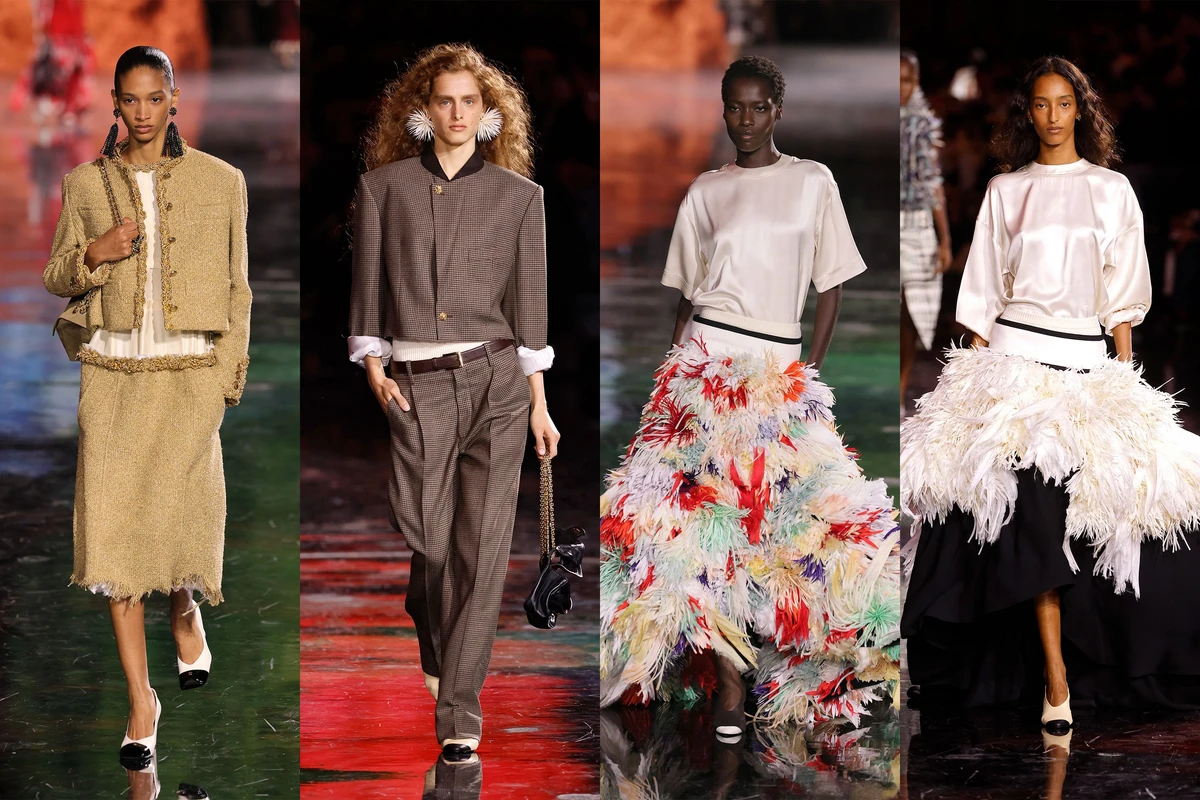

 Fashion Office
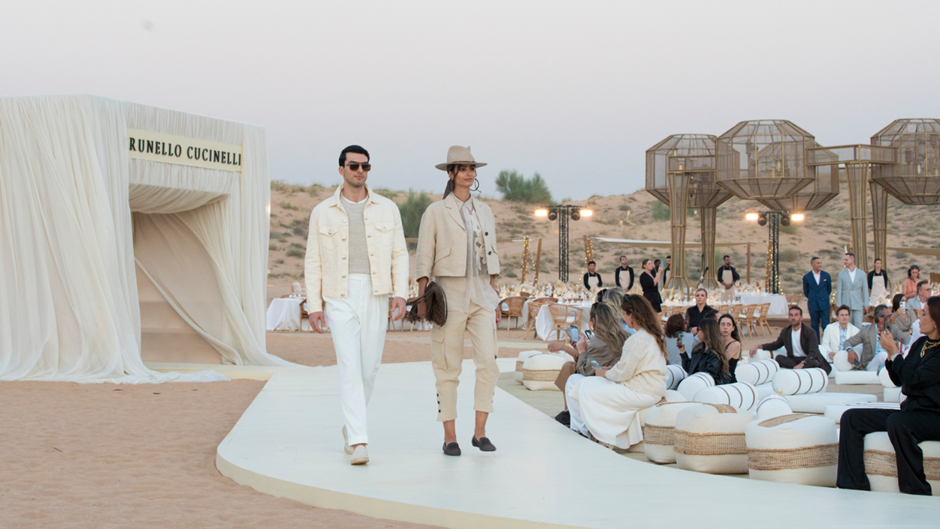
Source: Brunello Cucinelli Dubai Fashion Show Spring 25 For a decade, the industry confused expansion with...
Fashion Office
Why Luxury’s Next Big Price Move Will Make or Break Brands? Chanel Spring/Summer 2026 The luxury...
Fashion Office
Image :Riyadh Fashion Week Stella McCartney Luxury’s power map is being redrawn. While Europe, the US...




No comments yet.