


At the Vogue Business Summit, the regions luxury files under future demand were talking like builders. The mirror that pointed one way for forty years now points both.
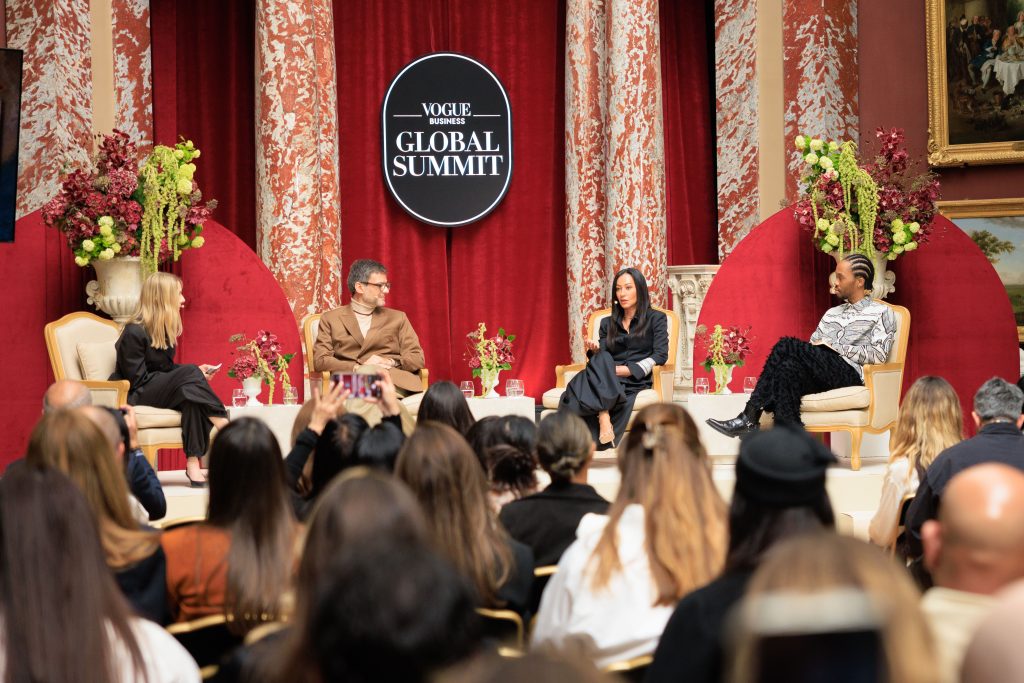
At the Vogue Business Summit, the tone on stage said it before any data did. The regions luxury had invited as guests, the Gulf, Brazil, Africa, were not talking like consumers waiting for the next collection. They were talking like builders, with their own talent, their own capital, and the explicit intent of exporting it.
Kering chief executive Luca de Meo coined the term Six Pack for the markets meant to carry luxury’s next decade of growth: Southeast Asia, India, the UAE and Saudi Arabia, Africa, Brazil and Mexico. The framing has been read as a growth-market wishlist. The panel told a different story. The Six Pack is not just a consumer market. It is a competitor.
For forty years luxury ran one way. Paris, Milan, New York conferred status, everyone else received it and paid for the privilege. That hierarchy is breaking. Validation now moves in two directions, authored by regions and consumers rather than handed down from European ateliers.
The generation now buying across the Gulf, Brazil, India and China grew up wealthy and culturally proud at once. Their parents bought European luxury because it was the pinnacle of heritage and craft, and there was no alternative. This generation does not need to borrow craft and heritage. It is building them at home.
Nermeen Nosseir detailed how Saudi Arabia is building its next generation of retail and hospitality destinations inside Diriyah. Bruno Astuto, of JHSF and Vogue Brazil, described an ambition for Brazilian brands to play on the global stage. Thebe Magugu represented African designers entering the conversation on their own terms, through heritage rather than through Paris.
The capital is following the talent, and most of it is sovereign. The Six Pack is not building luxury the way Europe did, brand by brand over a century. It is building it as industrial policy: state-funded, top-down, on a government timeline with patient capital that answers to a national strategy, not a quarterly margin. Saudi Arabia launched the ZYA Fund, its first dedicated fashion private equity vehicle, with $80 million committed to scale Saudi brands globally1; the Saudi 100 Brands programme stages its designers in Paris and Milan. In April 2026 Dubai committed a 1 billion dirham Creative Sector Resilience Portfolio, roughly $270 million, under a directive from its Crown Prince2. Abu Dhabi’s investment office runs a dedicated luxury accelerator; Dubai Design District and the Arab Fashion Council supply the institutional scaffolding. This is not a market waiting to be served. It is a competitor being funded into existence.
And the regions now have what they were once missing: the quality, the craft, the design, the local talent. The consumer is rewarding it. The Saudi Fashion Commission’s survey reports 55 percent express stronger loyalty to local brands, and the reflex is to call it patriotism. The data refuses: the top driver is quality at 85 percent, supporting local industry only third at 67 percent.3 Saudis buy local because the product got good enough. Seven of the top 25 fragrance brands they name are already local houses, and Saudi fashion is forecast to reach $40 billion by 2029.
China is the same playbook, further along. Backed by Beijing’s Made in China 2025 brand mandate, the shift from made in China to designed in China, and a state-designated China Brand Day, local houses now outgrow Western ones on home turf. Laopu Gold grew revenue 221 percent in two years to rank second in mainland China luxury, ahead of Hermès and behind only LVMH4; Songmont’s online handbag sales rose about 90 percent in 2025 while Gucci’s in China fell more than half.5 The reflex that Chinese consumers simply traded down does not survive the numbers: Laopu raised prices repeatedly and demand accelerated, and Mao Geping prices at parity with Dior. This is not cheaper. It is full-priced luxury, built at home and winning. Morgan Stanley’s Edouard Aubin argues meaningful disruption is still years away. Years away might be sooner than later.
Authentic connection lives beyond Ramadan capsules and Lunar New Year drops. It is the difference between visiting a culture and being invested in it.
The right answer is structural investment in the cultures themselves. And the houses reading the shift correctly are putting capital into it: in April 2026 Kering took a minority stake in ICCF, parent of the Shanghai house Icicle, through House of Wonders, a new vehicle to back emerging brands with cultural relevance6. The man who named the Six Pack is now buying into it. That is what staying culturally relevant costs, not a capsule but a cap table.
The shift is not only who builds luxury. It is where the world’s wealthiest consumers choose to buy it. Before the pandemic, roughly two-thirds of Gulf nationals bought their luxury fashion abroad, mostly in Europe. Now two-thirds prefer to buy it in the region.7 The flow reversed. The GCC spent $12.8 billion on personal luxury in 2024, growing 6 percent while the global market shrank 2 percent; the same euros that once landed in a Paris flagship are now booked in Dubai, and the region built the malls, the funds and the brands to receive them. Repatriation began as an accident of closed borders. The Gulf turned it into a strategy.
Recent regional instability, including the 2026 Iran conflict, disrupted travel and reinforced the pattern, keeping spend closer to home.8 War did not build the ecosystem. It proved why the region wanted one. The deeper point is structural: geopolitics is repricing where luxury is bought, moving it away from Europe as the default and toward regional resilience. A house that once relied on the Gulf tourist arriving in Paris now has to win that same consumer at home, on the consumer’s ground, against local brands the consumer is increasingly proud to wear.
Of course the East still wants the West. Western heritage, craftsmanship, and the codes that took a century to build do not lose their value overnight. But the more interesting half of the equation is the one no one is naming: the West now wants the East. For its consumers, its capital, its design vocabulary, its cultural energy. That is the structural shift. The market is becoming plural.
The houses that survive this transition will not be the ones with the cleanest supply chains or the sharpest margin bridges. They will be the ones that mean something specific to a specific person, in a specific place, beyond a calendar moment. Cultural relevance is the new moat. The houses still trying to be everything to everyone are the ones the new consumer is leaving behind.
The next cycle of luxury will be won wherever a brand can answer the question: what do you mean, here?
Sources
1 ZYA Fund, $80 million (SAR 300 million) committed. WWD, April 2026; BoF, October 2025.
2 Dubai Creative Sector Resilience Portfolio, AED 1 billion. Dubai Media Office, April 2026.
3 Local-brand loyalty and purchase drivers; $40bn by 2029. Saudi Fashion Commission, Fashion Futures Consumer Survey and Analysis 2025; Euromonitor.
4 Laopu Gold revenue growth and ranking. Frost & Sullivan via 36Kr, 2025.
5 Songmont and Gucci China online handbag sales. BigOne Lab via Bloomberg, 2025.
6 Kering minority stake in ICCF/Icicle via House of Wonders, announced at Kering Capital Markets Day. Reuters; The Impression, April 2026.
7 Repatriation: pre-pandemic ~66% of Gulf nationals shopped luxury abroad; now two-thirds prefer regional. GCC spend $12.8bn, +6% in 2024. Chalhoub Group, GCC Personal Luxury 2024, May 2025.
8 2025 Iran conflict disrupting Gulf luxury travel and demand. Communicate Online, April 2026.
The CFO Diary
Luxury News, Read Through the Balance Sheet
 Capital Couture
The most valuable thing De Beers owns may be the one asset nobody in the room...
Capital Couture
Five years of cultural momentum, zero euros in profit. The house has no creative director, no...
Capital Couture
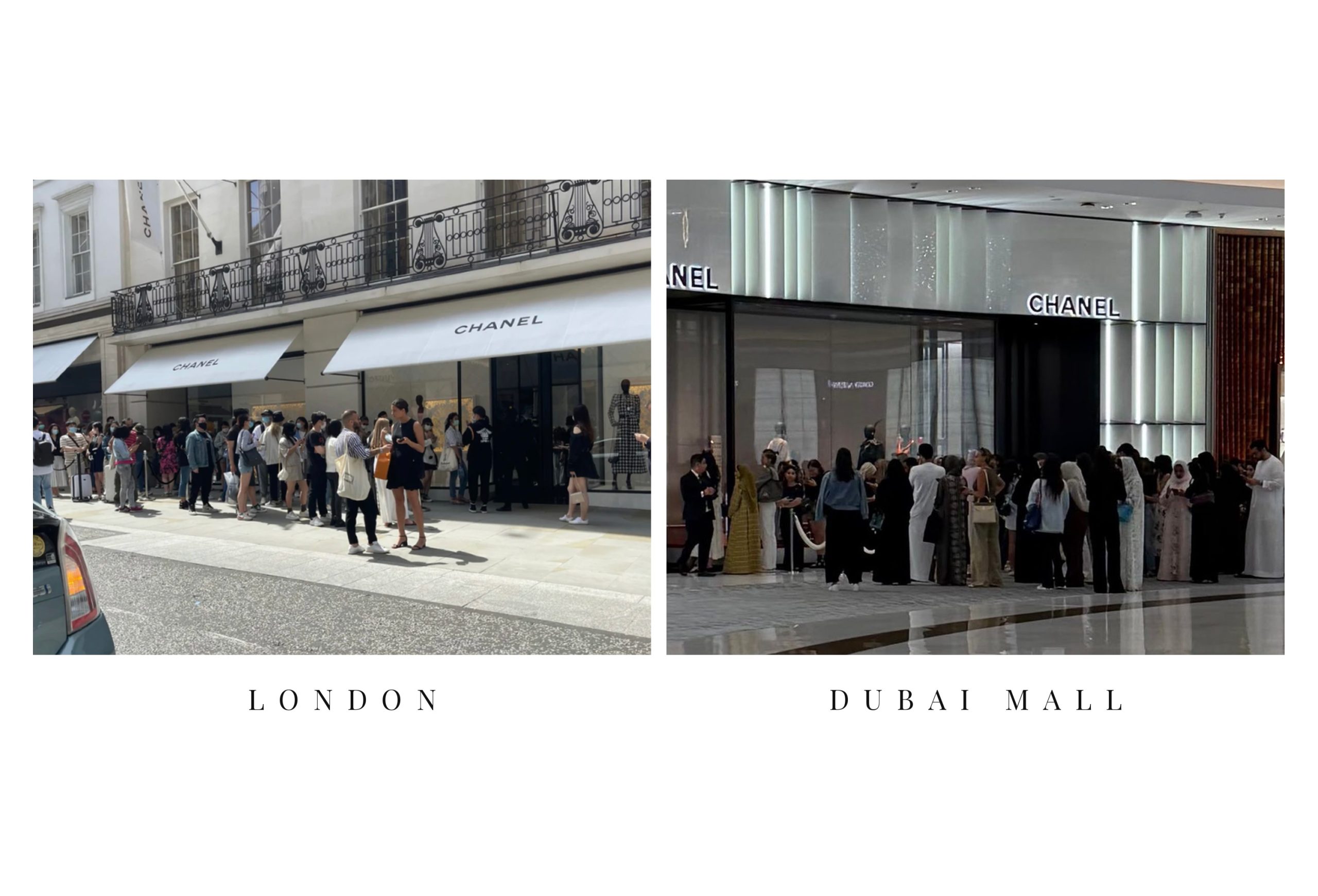
From London to Dubai, the queues looked the same: infinite. A scene the industry had quietly...



No comments yet.