


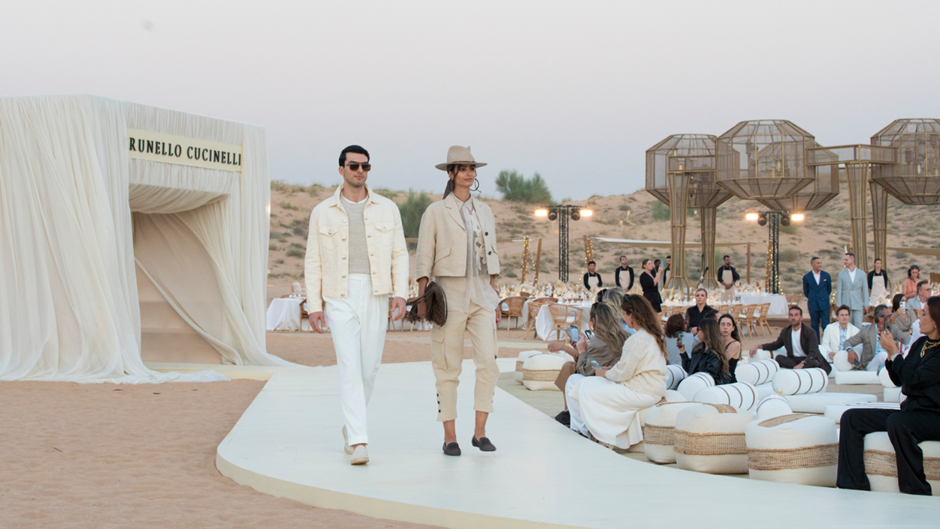
Source: Brunello Cucinelli Dubai Fashion Show Spring 25
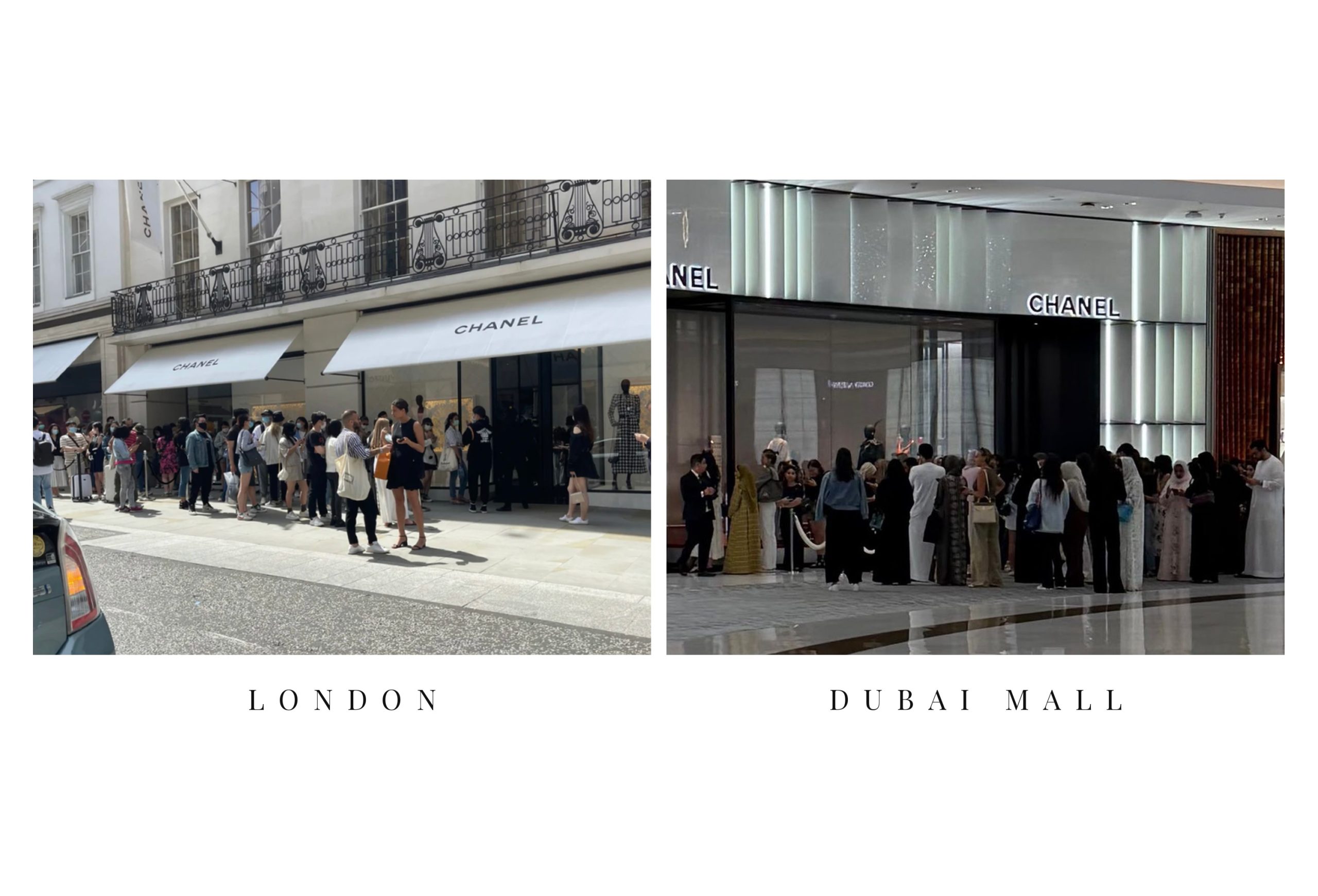
For a decade, the industry confused expansion with leadership, volume with relevance, and visibility with power. More collections, more collaborations, more markets—until desirability quietly collapsed under its own excess.
Even quiet luxury, once a language of restraint and discernment, became another overexposed signal, diluted by imitation and repetition. What was meant to whisper authority ended up shouting conformity.
This is not a crisis of imagination. It is a failure of restraint. As Dana Thomas documents in Deluxe, “The Luxury” that once felt rare became ubiquitous. “The Luxury” that commanded respect and desire now begs for attention.
Coco Chanel once said:
“Before you leave the house, look in the mirror and take one thing off.”
This principle applies to Luxury Leadership as much as it does to style. Before revealing more to the customer—another collection, another collaboration, another message—leaders should look in the mirror and remove. Remove what dilutes coherence. Remove what exists only because it can. Remove what weakens authority.
The future of luxury will not be won by those who add more—but by those who understood that less is more.
As shareholder pressure grew, collections multiplied. As digital platforms rewarded visibility, silence became a risk instead of a strategy. Each step made sense in isolation. Together, they dismantled the very mechanics that once protected desirability.
Expansion became the default response to relevance, not its consequence. More products replaced better decisions. And because all brands looked at each other unwillingto be left behind, the effect compounded. The result is an industry with more fashion weeks than any calendar can absorb and more clothes that any wardrobe can hold.
From a financial perspective, luxury’s expansion was logical. Global demand rose, raw material costs increased, and shareholder expectations recalibrated growth as a constant rather than a cycle. More collections meant more touchpoints. More markets meant more sales. Visibility became the dominant growth lever, reinforced through continuous campaigns and platform saturation.
Luxury was reduced to a numbers game, where leaders overlooked that, unlike most industries, it does not scale on volume alone but on belief, emotion, and meaning.
Each additional product, collaboration, or market entry not governed by discipline subtly diluted the narrative that pricing power depends on. Revenue grew, but authority thinned.
This is where traditional metrics fall short. They fail to capture the gradual erosion of meaning. Luxury’s most valuable asset—desirability—depreciates silently, well before it appears in the numbers. When growth eventually slows, authority is already gone. That is the structural crisis that Luxury faces today.
According to Bain–Altagamma, the global luxury consumer base shrank by approximately 60 million between 2022 and 2024, while margins were largely defended through price increases rather than volume.
The harder question is whether luxury knows how to bring those consumers back without repeating the very excess that drove them away.
Discipline as leadership is not conservatism or refusal to expand. Rather it is command.
Luxury once understood this instinctively. Collections were fewer. Decisions were slower. Visibility was earned rather than engineered. That discipline has since been replaced by decisions driven by social platforms, marketing calendars, and short-term performance incentives. Discipline disappeared because no one was willing to stop the machine. By the time the cost became visible, the consumer base had already begun to contract — with no clear path to recovery.
Authority has been preserved by brands that prioritised coherence over growth. Hermès is the most cited example, but the same discipline underpins Brunello Cucinelli’s long-term positioning.
Why does discipline restore luxury’s authority? Not authority as control, but as credibility and desirability,
Because it reintroduces coherence and long-term thinking into decision-making. It prioritises selection over accumulation. Restraint, in this context, is not limitation — it is strategy. It shows up in fewer launches, tighter calendars, and the discipline to remain silent when visibility would dilute authority.
Luxury does not need to reinvent the wheel. It needs leaders willing to disappoint in the short term to protect power in the long term.
For years now, consumption was trained to be frictionless: always available, endlessly repeatable, immediately replaceable. But friction is the engine of desire: It creates, anticipation, memory and attachment.
Luxury will not regain desirability by accelerating creativity or multiplying output. It will regain it by restoring meaning to choice.
This is not a retreat from growth. It is a recalibration of how growth is generated.
Volume is compatible with luxury only when governed by restraint. Once volume escapes discipline, luxury loses its relational dimension and becomes distribution. Restraint does not limit revenue; it protects the conditions under which value and trust can compound over time.
The future of luxury will belong to the houses that understand this distinction. Not those that produce more, but those that make every decision, every product, and every relationship matter again.
With Style and Strategy,
Kahina

 Fashion Office
This week, LuxExperience’s shares jumped as much as 24% on its results. Group CEO Michael Kliger...
 Fashion Office
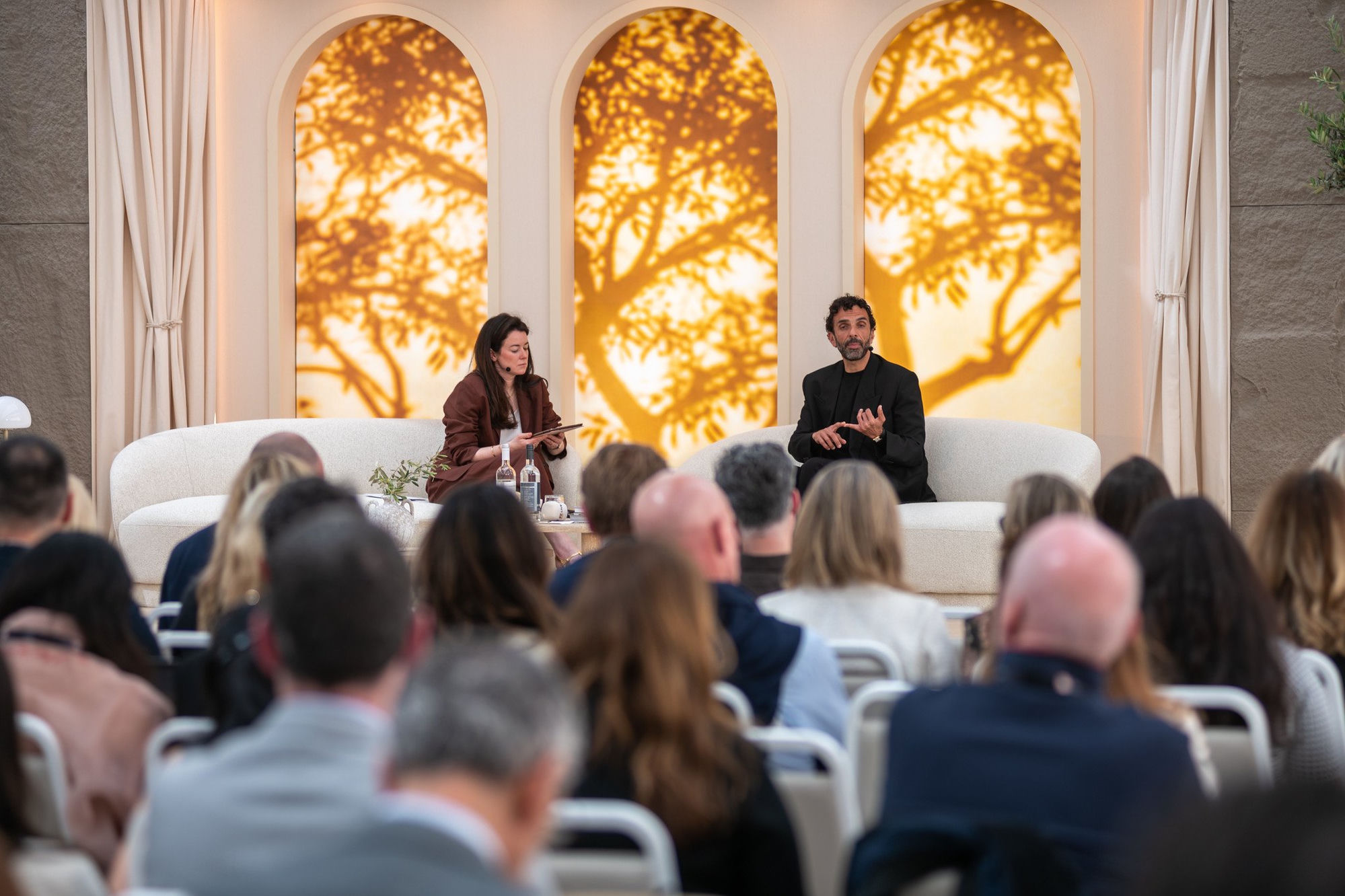
FT Luxury Summit with Elizabeth Paton and Cedric Charbit The most desirable house in fashion posted...
 Fashion Office
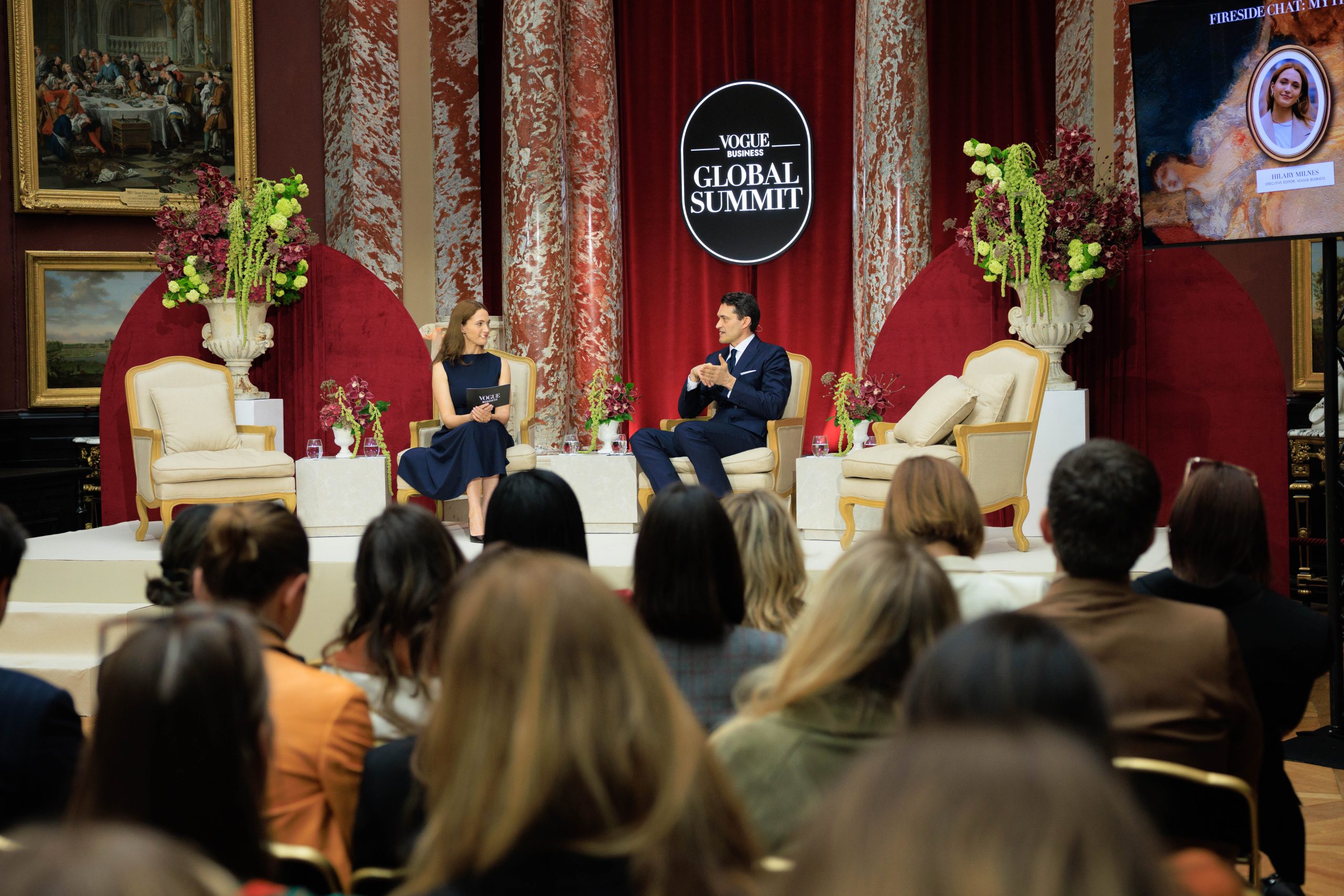
Chantilly 12.05.2026 C.F.O :Capital Fahion and Opinion Six panels. Four pillars of the luxury growth model...



No comments yet.