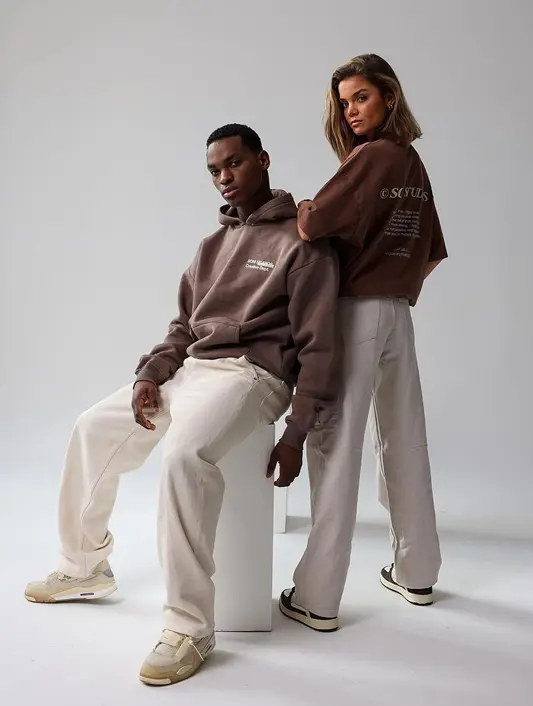
Img
The Chief Fashion officer: where style meets strategy
  • Get Social with us
  • img
  • img
img
  • Fashion arroe
    • Fashion Office

      Fashion Office

      Contrary to popular belief, Lorem Ipsum is not simply random text.

    • Brand Focus

      Brand Focus

      Contrary to popular belief, Lorem Ipsum is not simply random text.

  • Beauty
  • Culture
  • Curated by
  • Runaway
  • About
  • Contact

Curated Visuals.
Styled Stories.

  • In Partnership: Brand Stories We Love

    In Partnership: Brand Stories We Love

  • Everyday Elevated: Staples That Speak

    Everyday Elevated: Staples That Speak

  • Runway Inspired, Everyday Ready: Partner Picks for Real-Life Dressing

    Runway Inspired, Everyday Ready: Partner Picks for Real-Life Dressing

  • The Wellness Shelf: Supplements, Skincare & Self-Care

    The Wellness Shelf: Supplements, Skincare & Self-Care

  • Beauty Cabinet Confidential: Tried, Trusted, and Shoppable

    Beauty Cabinet Confidential: Tried, Trusted, and Shoppable

  • Textured Statements: A Collection of Sensory Staples

    Textured Statements: A Collection of Sensory Staples

  • Monthly Mood: A Visual Curation of Style, Texture, and Brand Favorites

    Monthly Mood: A Visual Curation of Style, Texture, and Brand Favorites

  • Textured Statements: A Collection of Sensory Staples

    Textured Statements: A Collection of Sensory Staples

  • Everyday Elevated: Staples That Speak

    Everyday Elevated: Staples That Speak

  • Runway Inspired, Everyday Ready: Partner Picks for Real-Life Dressing

    Runway Inspired, Everyday Ready: Partner Picks for Real-Life Dressing

  • Checked In: Travel Style Collaborations

    Checked In: Travel Style Collaborations

  • Skincare That Works: The Radiance Rituals

    Skincare That Works: The Radiance Rituals

imgTheCFODiary

The new Bonbonnière, described as baguette-shaped, The new Bonbonnière, described as baguette-shaped, raises an uncomfortable question:

Did Goyard fall into the trap of trend-chasing?

The silhouette feels familiar. Too familiar.
It echoes the Alaïa Le Teckel, the Miu Miu Mini Beau, and a growing wave of elongated mini bags flooding the market.

And that’s the problem.

Goyard’s strength was never relevance through trends.
It was Restraint. A refusal to play the seasonal game.

When a house built on heritage starts borrowing shapes from the hype cycle, the issue goes beyond one bag. It exposes a deeper fracture in the luxury industry.

When silhouettes become interchangeable across houses, luxury loses its edge. Design stops being driven by vision and starts being dictated by sales target and Instagram algorithm. One shape performs, and suddenly everyone adopts it — not because it’s inspired, but because it feels safe.

This isn’t creativity. It’s consensus.

And consensus is the enemy of Luxury!
Collector’s piece or couture IKEA? When luxury ask Collector’s piece or couture IKEA?
When luxury asks you to finish the job.

Luxury has long justified pricing power through craftsmanship and scarcity.
Now, it’s testing a different lever: participation.

Fendi has released a Baguette sold with an embroidery kit, inviting the client to complete part of the product themselves — for roughly $4,000.

This isn’t about thread or personalization.
It’s about where value is now being manufactured.

For luxury groups facing slowing volume growth, pricing resistance, and rising customer acquisition costs, the shift from product differentiation to experience-based differentiation is rational capital allocation.

Participation creates emotional lock-in, narrative ownership, and higher tolerance for price — without materially increasing production costs.

But it also raises a structural question:

If craftsmanship migrates from the atelier to the consumer,
what exactly is being capitalized — the object, or the accessibility to it.

“It’s not a bag. It’s a Baguette.”

That line was never about leather.
It was about cultural power. The moment a bag becomes a statement.

Today, Fendi is testing whether that symbolic power is strong enough to survive a new phase — one where ownership becomes authorship.

Some will call this innovation.
Others will call it outsourcing.

And that polarization is the point.
Because luxury is not built on consensus.
It is built on tension.

Whether you like this move or not, it does exactly what luxury is meant to do:
create debate, draw lines, and signal who belongs on which side of them.
Will you buy Fendi Baguette kit ?
Coco Chanel once said: “Before you leave the hous Coco Chanel once said:

“Before you leave the house, look in the mirror and take one thing off.”

This principle applies to luxury leadership as much as it does to style. Before revealing more to the customer—another collection, another collaboration, another message—leaders should look in the mirror and remove. Remove what dilutes clarity. Remove what exists only because it can. Remove what weakens authority in the name of momentum. 

📉 According to Bain–Altagamma, ~60 million luxury consumers exited the market between 2022–2024 — while margins were defended through price, not trust.

So the real question is not how to sell more.
It’s how to make people believe again.

📖 Read the full article on The CFO diary . Link in bio
Not really for walking but these Alaia shoes are s Not really for walking but these Alaia shoes are stealing the show!!!
We live in an era where fashion preaches mindfulne We live in an era where fashion preaches mindfulness while launching ten collections a year.
Where #ConsciousChoice trends beside #NewIn.
Where responsibility has become an accessory — elegant, optional, disposable.

Conscious fashion is real.
Accountability is the hard part.

Who carries it first: the industry that engineers desire, or the consumer trained to chase novelty?
Read full article wrote for the Vanilla Issue . Link in comment
The luxury industry is entering a new era — not of The luxury industry is entering a new era — not of creativity, but of accountability.
After years of inflationary drift, consumers have become the most honest auditors in the value chain. They are informed, strategic, and unwilling to pay for a dream that no longer aligns with the product.
A shrinking customer base, softening global demand, and the strongest growth coming from resale, not retail.
Price is the biggest problem .
Consumers didn’t reject Chanel’s 2.55 or Dior’s Bar Jacket.
They rejected the math behind them.
The product stopped justifying the premium — and the premium stopped respecting the product.

The future of luxury belongs to the Houses that understand one thing:
Price is no longer a number — it’s a promise.

Read the full breakdown: what’s breaking, what’s shifting, and where pricing discipline will decide the winners of the next decade.
🔗 Link in bio.
footer logo The Chief Fashion officer: where style meets strategy
explore by category
  • Beauty
  • Fashion
  • Culture
  • Runaway
Quick Links
  • Home
  • About
  • Curated by
  • Contact
lets connect
  • kahina@thecfodiary.com
  • facebook
  • instagram
  • © - CFODiary
  • All rights reserved

Designed & Developed by Tequila.ae